Sunday, August 5, 2012

Chapter 10 - Connection


Lastly, the final chapter reminds me of the movie "August Rush". It does so in the way that both Slaughterhouse-Five and "August Rush" are depressing throughout the book and movie. There is not happiness until the end. In "August Rush", it is that the main character has found his family and the search is over. In Slaughterhouse-Five, it is that war is finally over. An even further connection is that now my blogs are over.

Chapter 10 - Motif


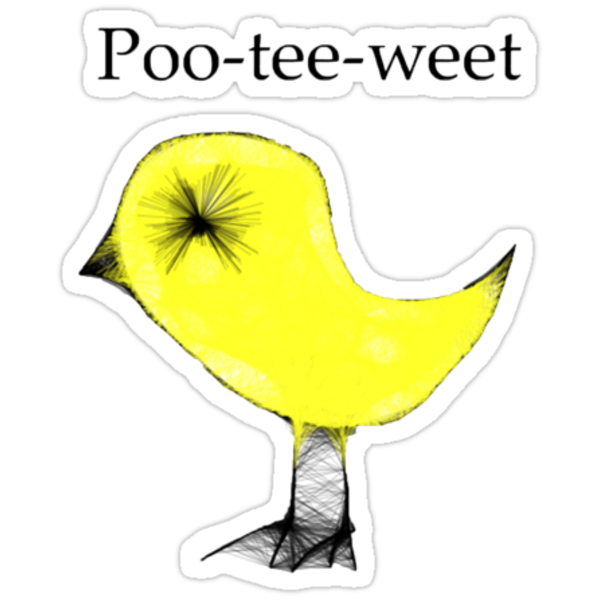
I am speechless. I'm a little confused on why Vonnegut would ever write this. Nonetheless, from what I understand, Billy went through dark times with a motif popping up every once in while. That motif is "Poo-tee weet?" (215). This shows that in moments of darkness and hopelessness, there is light. That light is the motif that birds call out, "Poo-tee-weet?" (215). Obviously, the phrase, "So it goes" (6) is a much stronger example, but I already used it in a previous blog.

Chapter 9 - Connection


Another movie I have not seen, but have heard of is "Inception". This chapter reminds me of that movie because I know that the movie talks about dreams meshing in with reality and then characters can't tell the difference any longer. This is similar to chapter nine because Billy is questioning if the affair with Montana Wildhack was a dream or reality.

Chapter 9 - Hubris


I wouldn't say that there is a single downfall in this book, but more of a long and endless stream of downfalls. This is powered by Billy's sleep, his hubris. Whenever Billy sleeps, he seems to time travel and when he time travel he always travels to a troubled time. So Vonnegut describe Billy sleeping in the green, coffin-shaped wagon, I couldn't help, but realize that there is a dual meaning when he wrote, "Billy Pilgrim was armed as he snoozed" (195). Yes that means Billy did have a gun attached to him, but I also took as though the time travel was his hubris, what lead him to trouble.

Chapter 8 - Connection

The movie "Silent Night" has so many similarities with this chapter, that it is uncanny. It is about World War I and that all the armies took a cease fire just for Christmas. During the cease fire they invited each other into each bunker to celebrate together. This is similar to chapter since it deals both with a World War and an act of companionship.

Chapter 8 - Tone


The tone in chapter eight has changed towards the end. After the bombing of Dresden, the tone has become scared and humbled simultaneously. This shown through a German's compassion when he lets the prisoners eat some of his food and lets them sleep in his inn. The tone is very apparent when the German said, "'Good night, Americans...Sleep well'" (181). This is probably a highlight of the book for me.

Chapter 7 - Connection


Oddly enough, the book is starting to grow on me. This connection may be one of my favorites as well. Whenever I read the syrup excerpt, I instantly thought of Twinkies. Why? Well, in a movie called "Zombieland" a rough and tough, cowboy-like character is hungry for some Twinkies. The only thing is that he can't get his Twinkies because the world has been hit by a Zombie Apocalypse. With help from two teenagers and little girl, his craving for a Twinkie was fulfilled. This falls under that theme of enjoy the little things because even though he was attacked by zombies, he continued to fight for a small pleasure that still remained in his life.

Chapter 7 - Theme


This novel has many themes, but one that drew to my attention is that we should enjoy the little things in life. For instance, when the POWs were working in the syrup factory,  Billy made Edgar Derby a syrup lollipop. This shows the theme I understood because when Edgar had eaten the syrup, "[He] burst into tears" (161). Now this may be his way of dealing with nostalgia, but since this book is so dark I would like to brighten it up by saying that his tears were tears of joy and that the act of making a syrup lollipop made all the difference.

Chapter 6 - Connection


Billy's death reminds me of the movie "The Pink Panther". ("The Pink Panther" with Steve Martin of course.) In "The Pink Panther", there is a famous soccer coach that has the famous pink panther diamond. Once the game is over and his team has one, a mob of fans come to the field to surround him. In that time frame, he was murdered just before asking his girl friend to marry him. This is similar to Billy Pilgrim's death because Billy, too, was killed in front of a stadium filled with people.

Chapter 6 - Foreshadowing


Billy obviously knows when and how he is going to die because he is a time traveler, but there is foreshadowing of his murderer. When talking with a co-POW named Paul Lazzaro, Billy knows that Lazzaro will be involved  in Billy's murder. This is foreshadowed when Lazzaro states, "...Whenever the doorbell rings, have somebody else answer the door" (141). This shady and sinister quote pretty much solidifies that he will murder Billy Pilgrim.

Chapter 5 - Connection


The novel that is also a movie, "Water for Elephants", is what best relates to this chapter. I have only seen the movie so that is what I am going to relate to. Anyway, in the movie, there is a traveling circus. A man jumps on as a stowaway became the circus's vet. The ring leader was the owner and his wife was the headlining act. Through many events that you'll just have to read about and/or watch , the vet falls in love with ringleader's wife. (Read the book or watch the movie for the ending.) I thought this is comparable to Billy since he has an affair with Montana Wildhack even though Billy is married. I didn't know love doesn't travel through time.

Chapter 5 - Flat Character


This chapter was quite scandalous if I may say so myself. The Billy Pilgrim that has been described to us thus far is changing! He is a flat character, undoubtedly, but he adds a personality trait when he makes love to Montana Wildhack. That personality trait is uncharacteristic of his character. (Ya see what I did there?) The change of his personality comes through when "[He] uncovered his head"(100). This is symbolic because the sheet acts as a shield and when he uncovers he is taking a chance as a opposed to his usual mopey self.

Chapter 4 - Connection


Well, as all of you can probably tell by now, this book has angered me very much. What else would be the proper connection to a terrible classic than a terrible highly appraised children's movie? If you answered "Nothing", then congratulations you have earned a substantial amount of brownie points. All the talk about aliens in chapter four reminded me a childhood movie called "Chicken Little". Everyone knows and loves it as the story that your mother told you before you went to bed, but someone had to turn it into a movie and ruin it for everyone. Anyway, the connection between Vonnegut's novel and "Chicken Little" is the alien phenomenons that affect the main characters.

Chapter 4 - Onomatopoeia


I personally think that onomatopoeia is a rather lame literature term to do a blog on, but this was a pretty lame chapter. The lesson learned here, dear children, is that you get what you give. Anyway, an example of an onomatopoeia is when " Billy gurgled and cooed" (85). Since this is a random and lame post and lit. term I now feel obligated to say that this book is out of control. The story line is murky and in no way, shape or form should this every be considered a classic. Well, that is my two cents worth of a book review. 

Chapter 3 - Connection


After reading chapter three, I feel as though there is something on the inside that is bothering Billy. The song Demons by Imagine Dragons best conveys this message. The message is specifically pointed out in the phrase of the song that goes, "Don't get too close, It's dark inside, It's where my demons hide." It shows the darkness inside of Billy no matter where he is or what time period he is in because his darkness travels with him.

Chapter 3 - Antihero


This book just keeps depressing me. In this chapter, we find that Billy is an antihero. He lacks the motivation and determination to better his life. This proven in several ways, but what stood out to me was even when he wasn't at war, he had trouble sleeping, but "Tears came instead" (62).

Wednesday, August 1, 2012

Chapter 2 - Connection


All I can think about in this chapter is the movie "Dead Poets' Society". Although I have not actually seen the movie, one epic and  famous scene stands out in relativity to this chapter.  That scene is the "Carpe Diem" speech. The speech consists of of Mr. Keating, Robin Williams, telling his all boys English class to seize the day. (That is "Carpe Diem" for all you Latin buffs out there.) To me, this is the underlying message of chapter two. Although Billy has the power to "time travel", his life is still filled with death which I take as a warning to the readers since we cannot time travel. We live to die so "Seize the day, boys. Make your lives extraordinary."

Chapter 2 - Diction


After reading chapter two, my mind feels slightly violated to say the least. I understand that Billy Pilgrim is a time traveler, but my goodness Vonnegut; make it a clear story line! Lord knows that if this was an SAT essay, he would be receiving a terrible score. Anyway, both my confusion and understanding come from Vonnegut's diction. My confusion comes from the unclear transition from time period to time period. From what I understand, the phrase, "So it goes" (35) comes into play. After the lovely story of the alien plungers from Tralfamadore, it would seem as though Billy is questioning life after death. In other words, the plungers of Tralfamdore have told Billy that at death, a person doesn't die, but they just keep living in that single moment (a.k.a. a stand still). They then taught him how to time travel which he soon realizes is uncontrollable. Through Billy's life and time travel, he encountered several deaths only to be followed by the infamous phrase, "So it goes" (35). With time travel in mind, the phrase questions death making death seem as it is something that supposedly happens and is not definite. In contrast, the diction Vonnegut uses complicates and contradicts Billy's time traveling since Vonnegut wrote, "He has seen his birth and death many times, he says, and pays random visits to all the events in between" (23). This suggests that Billy cannot travel before his birth or after death. That is aggravating because it shouldn't be called time traveling; it should be called reminiscing. AHHH!!! Classics bother me...